




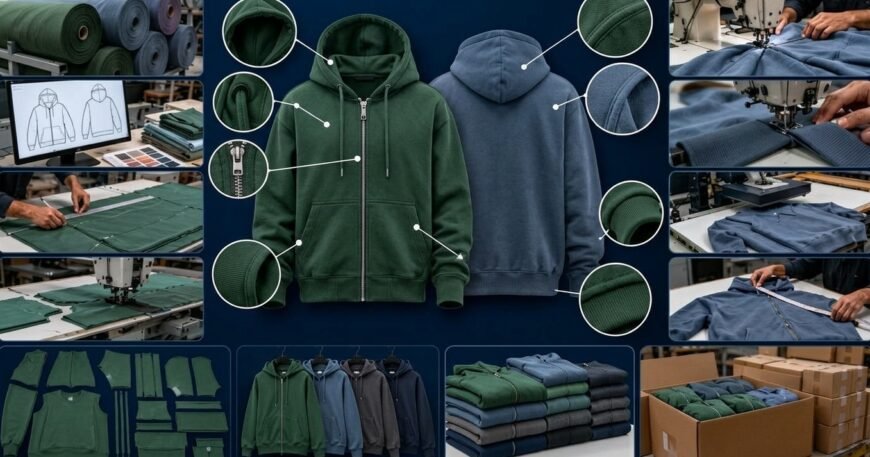
Hoodies are a popular clothing choice for everyday wear, sportswear, streetwear, and fashion collections. Their comfort, versatility, and practical design make them a staple in wardrobes around the world. But have you ever wondered how hoodies are made and what goes into producing a high-quality hoodie?
The hoodie manufacturing process involves several stages, from selecting the right fabric and creating patterns to cutting, stitching, printing, and final quality inspection. Every step affects the comfort, durability, fit, and appearance of the finished garment.
In this guide, we’ll explain how hoodies are manufactured, which materials are commonly used, how custom designs are added, and what brands should consider when planning hoodie production.
How Are Hoodies Made? The Manufacturing Process Explained
Hoodies are generally produced through a series of carefully planned steps. Although the exact process varies depending on the design and manufacturer, most hoodie production follows a similar workflow.
1. Choosing the Right Hoodie Fabric
The first step in hoodie manufacturing is selecting a suitable fabric. The material determines how soft, warm, breathable, and durable the finished hoodie will be.
Common fabrics used to make hoodies include:
- Cotton: A soft, breathable material suitable for comfortable everyday clothing.
- Polyester: A durable synthetic fabric that dries relatively quickly and helps garments maintain their shape.
- Cotton-polyester blends: A combination that balances comfort, durability, and ease of care.
- Fleece: A warm fabric commonly used for winter hoodies and heavyweight sweatshirts.
- French terry: A knitted fabric with a looped interior, often used for lightweight and midweight hoodies.
Manufacturers select materials based on the intended use, season, target audience, budget, and desired quality. Before production begins, the fabric is checked for defects, color consistency, and potential shrinkage.
Choosing the right material is essential for producing hoodies that meet customer expectations.
2. Creating the Hoodie Design and Pattern
Once the fabric is selected, the next step is developing the hoodie design and creating its patterns.
Designers determine the hoodie’s measurements, fit, sleeve style, hood shape, pocket placement, and finishing details. They may also specify colors, logos, prints, zippers, and other custom features.
Pattern makers then create templates for each component, including the front and back panels, sleeves, hood, pocket, cuffs, and waistband.
These patterns guide the cutting process and help ensure that all pieces fit together correctly.
For brands ordering custom hoodies, approving a sample before bulk production can help identify sizing or design issues early and reduce costly revisions.
3. Cutting the Fabric
After the design and patterns are finalized, the fabric is prepared for cutting.
The material is spread across a cutting table, and the pattern pieces are arranged to use the fabric efficiently. Manufacturers then cut the fabric into the required shapes and sizes.
Depending on production volume, cutting may be performed manually or with industrial cutting equipment.
Accuracy is particularly important during this stage. Uneven cuts or incorrect measurements can affect the hoodie’s fit and make assembly more difficult.
After cutting, the individual pieces are organized by size, design, and production batch to keep the manufacturing process consistent.
4. Stitching and Assembling the Hoodie
Stitching is one of the most important stages in the hoodie manufacturing process. During this step, the separate fabric pieces are joined together to create the finished garment.
The assembly process generally includes:
- Sewing the hood sections together.
- Attaching the front pocket to the body panel.
- Joining the shoulder seams.
- Attaching the sleeves to the body.
- Connecting the hood to the neckline.
- Sewing the side and sleeve seams.
- Adding ribbed cuffs and the bottom waistband.
- Installing zippers, drawstrings, or other design features where required.
Industrial sewing machines help create consistent seams, while skilled operators ensure that the pieces are correctly aligned.
Strong stitching is essential because hoodies are frequently washed and worn. Proper construction helps the garment maintain its shape and withstand regular use.
5. Adding Custom Prints, Logos, and Embroidery
Customization allows clothing brands to create hoodies that reflect their identity. Businesses, fashion labels, sports teams, and promotional campaigns often use printed graphics, embroidered logos, and branded labels.
Popular hoodie customization methods include:
Screen Printing: This technique is suitable for many bold designs and larger production runs.
Embroidery: Designs are stitched directly onto the garment, creating a textured and professional finish.
Heat Transfer Printing: A design is transferred onto the fabric using heat and pressure.
Direct-to-Garment Printing: DTG technology prints detailed artwork directly onto compatible garments.
The right method depends on the fabric, artwork, design complexity, quantity, and expected finish.
Before full production, brands should review a sample to confirm the design placement, colors, and overall appearance.
6. Finishing and Quality Control
After stitching and customization, each hoodie undergoes finishing and quality inspection.
Loose threads are trimmed, seams are checked, and the garment may be pressed or steamed to improve its appearance. Manufacturers then inspect the product against the approved specifications.
Typical hoodie quality checks include:
- Fabric defects and color consistency.
- Correct sizing and measurements.
- Stitching quality and seam strength.
- Print and embroidery accuracy.
- Proper placement of pockets, cuffs, and drawstrings.
- Overall appearance and finishing.
Depending on the product requirements, manufacturers may also perform shrinkage or washing tests.
Quality control helps identify defects before the hoodies reach customers, reducing returns and protecting a clothing brand’s reputation.
7. Folding, Packaging, and Shipping
The final stage of hoodie production is preparing the garments for delivery.
Once a hoodie passes inspection, it is folded, tagged, and packaged according to the buyer’s requirements. Packaging may include size labels, care instructions, barcodes, branded tags, and individual protective bags.
The finished products are then counted, packed into cartons, and prepared for shipping.
For clothing businesses, professional packaging helps protect products during transportation and creates a consistent brand experience.
What Factors Affect the Cost of Hoodie Manufacturing?
The cost of producing hoodies varies according to several factors. Understanding these factors helps businesses plan their budgets and compare manufacturer quotations.
Fabric selection: Premium cotton, heavyweight fleece, and specialized materials may cost more than standard fabrics.
Design complexity: Custom cuts, additional panels, pockets, and specialized construction can increase production costs.
Printing and embroidery: The decoration method, design size, number of colors, and stitch complexity can affect the final price.
Order quantity: Larger orders may reduce the cost per hoodie, depending on the manufacturer’s pricing structure and setup costs.
Quality requirements: Specialized testing, detailed inspections, and premium finishing may increase overall expenses.
Packaging and shipping: Custom packaging, delivery location, and shipping method also contribute to the total cost.
Before requesting a quotation, prepare your design, fabric preferences, size range, order quantity, customization requirements, and delivery expectations.
How Long Does It Take to Manufacture Hoodies?
The time required to manufacture hoodies depends on the design, order quantity, fabric availability, customization requirements, and production schedule.
A typical order may involve several stages:
- Design development and sample preparation.
- Sample review and approval.
- Fabric sourcing and bulk production.
- Printing, embroidery, and finishing.
- Quality inspection and packaging.
- Shipping and delivery.
Custom hoodie orders may take longer than repeat orders because they require additional design and sample approvals. Material shortages or design changes can also affect the schedule.
To keep production on track, finalize specifications early, approve samples promptly, and confirm the delivery timeline with the manufacturer before placing an order.
How to Choose a Hoodie Manufacturer
Choosing the right manufacturer is important for businesses that want consistent product quality and reliable delivery.
Before selecting a supplier, consider the following factors:
- Manufacturing experience: Look for experience producing the type of hoodie you need.
- Material options: Confirm that the supplier can source fabrics that meet your requirements.
- Customization capabilities: Ask about printing, embroidery, labels, and other branding options.
- Quality control: Understand how the manufacturer inspects finished garments.
- Minimum order quantity: Check whether the supplier accepts your planned order size.
- Samples and pricing: Request a sample and a detailed quotation before committing to bulk production.
- Communication and delivery: Confirm production milestones, shipping arrangements, and expected delivery dates.
Comparing suppliers on these factors can help you make a better-informed decision and avoid unexpected costs.
Frequently Asked Questions About Hoodie Manufacturing
How are hoodies made step by step?
Hoodies are generally made by selecting fabric, creating patterns, cutting the material, stitching the garment, adding prints or embroidery, inspecting quality, and preparing the finished products for packaging and shipping.
What fabric is best for making hoodies?
Cotton is popular for softness and breathability, polyester offers durability and relatively quick drying, and cotton-polyester blends provide a balance of comfort and practicality. Fleece and French terry are also widely used, depending on the desired warmth and weight.
How are logos added to hoodies?
Logos can be added using screen printing, embroidery, heat transfer printing, or direct-to-garment printing. The best option depends on the fabric, design, order quantity, and desired finish.
Are hoodies manufactured by hand or machine?
Commercial hoodie production typically combines industrial machinery with skilled manual work. Machines handle many cutting and sewing tasks, while workers help with assembly, finishing, decoration, and quality inspection.
What should I consider before ordering custom hoodies?
Consider fabric type, garment weight, sizing, colors, logo placement, printing method, minimum order quantity, quality standards, packaging, production time, and shipping costs.
Why is quality control important in hoodie manufacturing?
Quality control helps identify problems such as incorrect sizing, loose stitching, fabric defects, and printing errors before the products reach customers. It supports consistent quality and can reduce returns and customer complaints.
Conclusion
Understanding how hoodies are made helps clothing brands make better decisions about fabric selection, design, customization, production costs, and quality standards.
From creating the initial pattern to stitching the garment and inspecting the finished product, every stage contributes to the hoodie’s comfort, appearance, and durability.
Whether you’re developing a new clothing line or sourcing custom hoodies for your business, clear specifications and careful manufacturer selection can help you achieve consistent results.
By focusing on suitable materials, accurate construction, effective quality control, and reliable production planning, businesses can create hoodies that meet their design requirements and customer expectations.
